The event “The Climate Change Conversation: Youth Voices for a Sustainable World”, held from April 1 to 4, 2025, in Košice (Slovakia), was organized by Youthfully Yours SK within the framework of the European project YouthZero2Hero. The international meeting brought together 75 young people and institutional representatives from eight European countries, aiming to promote youth leadership in the fight against climate change through knowledge exchange, critical reflection, intergenerational dialogue, and local action.
The event began on April 1 with a welcome dinner at Hotel TeleDom. The hosting team introduced the agenda, shared welcome kits, and facilitated an informal intercultural networking session among participants.
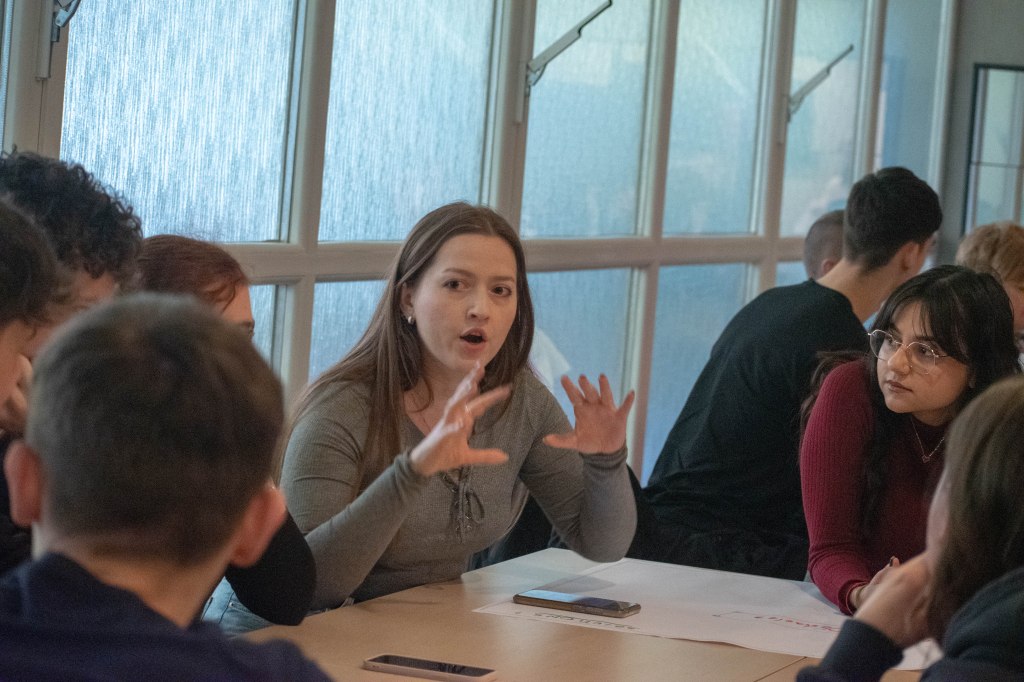
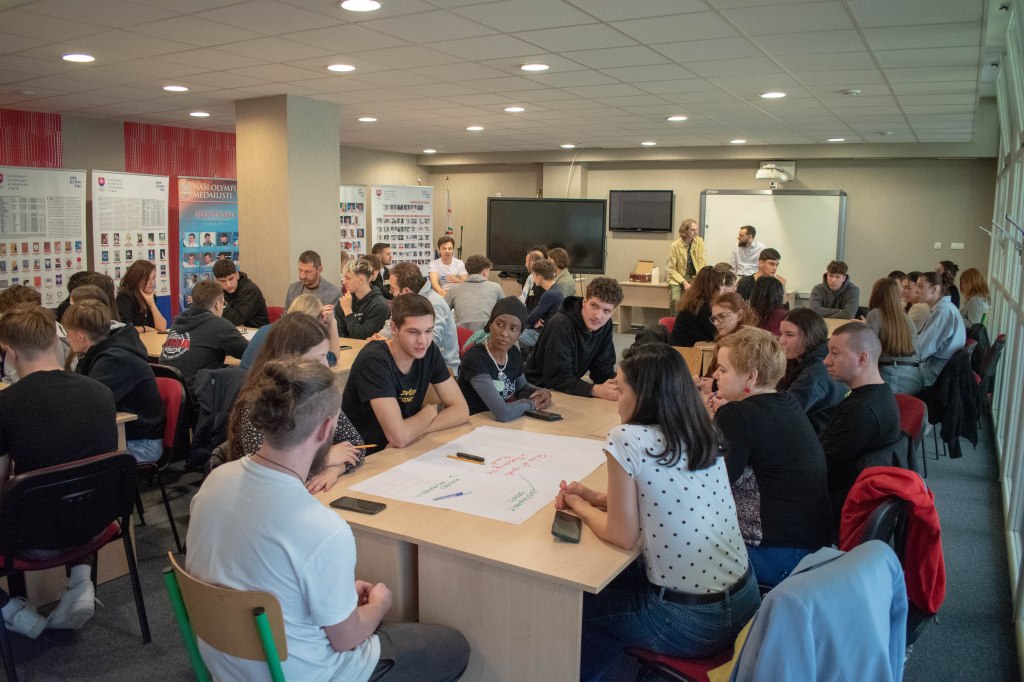
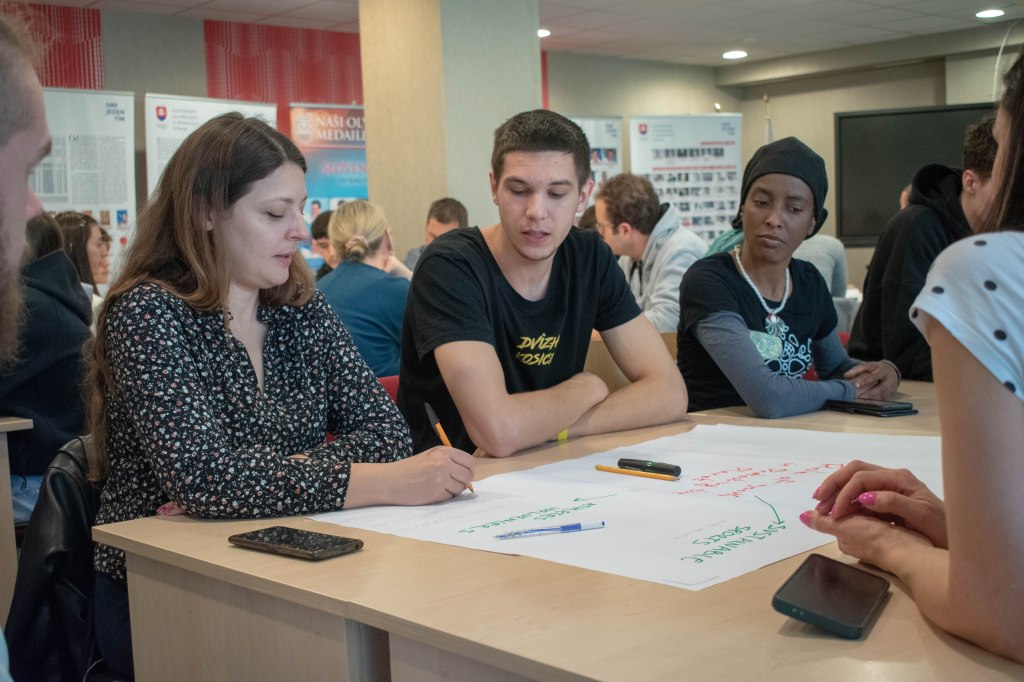
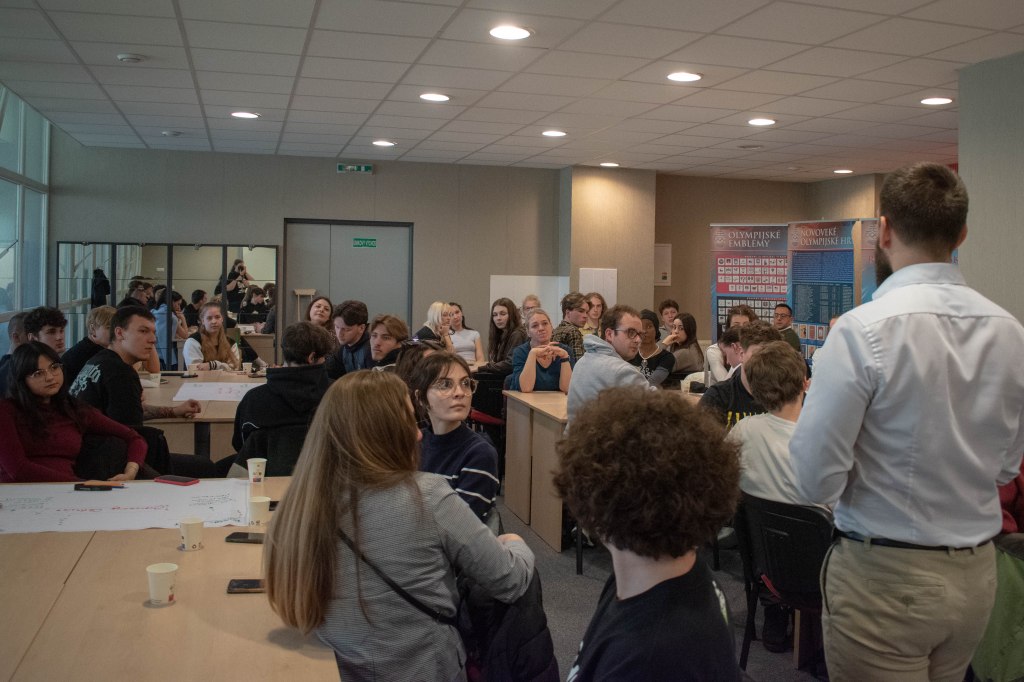
On April 2 the morning was dedicated to a dynamic session hosted at the Sports Gymnasium of Košice, where the event’s flagship activity took place: an interactive Open Debate and Green Talk Competition. Designed around the World Café methodology, the session created a vibrant, youth-led environment for collective learning, critical thinking, and dialogue.
Facilitated by experienced trainers from Youthfully Yours SK and joined by a youth policy officer from Košice’s municipal government, the two-hour activity brought together over 50 secondary school students and project participants from across Europe. Discussions were structured around five key thematic stations:
- Climate Change Hoaxes – Debunking conspiracy theories and disinformation, while identifying tools to promote climate literacy and media awareness.
- Everyday Actions for Sustainability – Sharing low-barrier, high-impact actions that young people can adopt to reduce their ecological footprint.
- The Role of Sports in Environmental Awareness – Exploring how physical activity and school-based sports can serve as platforms for sustainability education.
- Youth and Public Institutions – Engaging in an open, critical dialogue with government officials on youth participation, institutional transparency, and communication gaps.
- Overcoming Barriers to Youth Action – Reflecting on personal and systemic obstacles, and identifying strategies to stay engaged and resilient in climate activism.
The session proved particularly valuable for local decision-makers, who gained first-hand insights into the perspectives, concerns, and proposals of young citizens. For many students, this was also their first opportunity to communicate in English with peers from other countries, making the activity not only intellectually enriching but also personally empowering—sparking new interest in language learning, volunteering, and civic engagement.
In the afternoon, participants took part in a guided cultural tour of Košice’s historic center, discovering its rich architectural heritage and vibrant stories while deepening connections among international peers. Later in the day, project coordinators convened for a strategic coordination meeting to finalize the design of the transnational youth survey, confirm event dates in Estonia, Slovenia, and Bulgaria, and plan future project milestones. The collaborative spirit of the meeting reinforced the cohesion of the consortium and its shared commitment to youth-driven sustainability.
On the third day, participants embarked on a field visit to Ekocentrum Sosna, an acclaimed eco-educational hub situated in the rural village of Družstevná pri Hornáde, just north of Košice. The visit offered an immersive experience that blended environmental education with practical demonstration.
The program unfolded in two complementary parts:
● A theoretical session led by an experienced environmental activist, which encouraged participants to reflect critically on the philosophical underpinnings of sustainability. Through a guided discussion, they explored concepts such as “What is truly good development?” and engaged with urgent global challenges like ocean waste, biodiversity loss, and environmental justice.
● A hands-on exploration of the center’s ecological infrastructure. Participants toured various installations showcasing sustainable practices in action, including permaculture gardens, natural building techniques, rainwater harvesting systems, composting solutions, and energy-efficient design. The tour demonstrated how small-scale, community-based innovations can contribute to long-term climate resilience and ecological balance.
The visit sparked deep engagement and meaningful dialogue, reinforcing the project’s objective to empower young people with the tools and perspectives needed to become sustainability leaders. Many participants expressed motivation to replicate or adapt specific approaches in their own municipalities and youth groups.
In the afternoon, participants returned to Košice and enjoyed free time to continue exploring the city, strengthen intercultural connections, and reflect on the transformative experiences of the previous days.
 Zavod Boter