The central day of the international conference took place on Tuesday, 22 September 2026, in the heart of Novo mesto. The date was no coincidence: the conference was held during European Mobility Week, and its main part coincided with the European Car-Free Day, when towns and cities across Europe open their streets to people rather than cars.
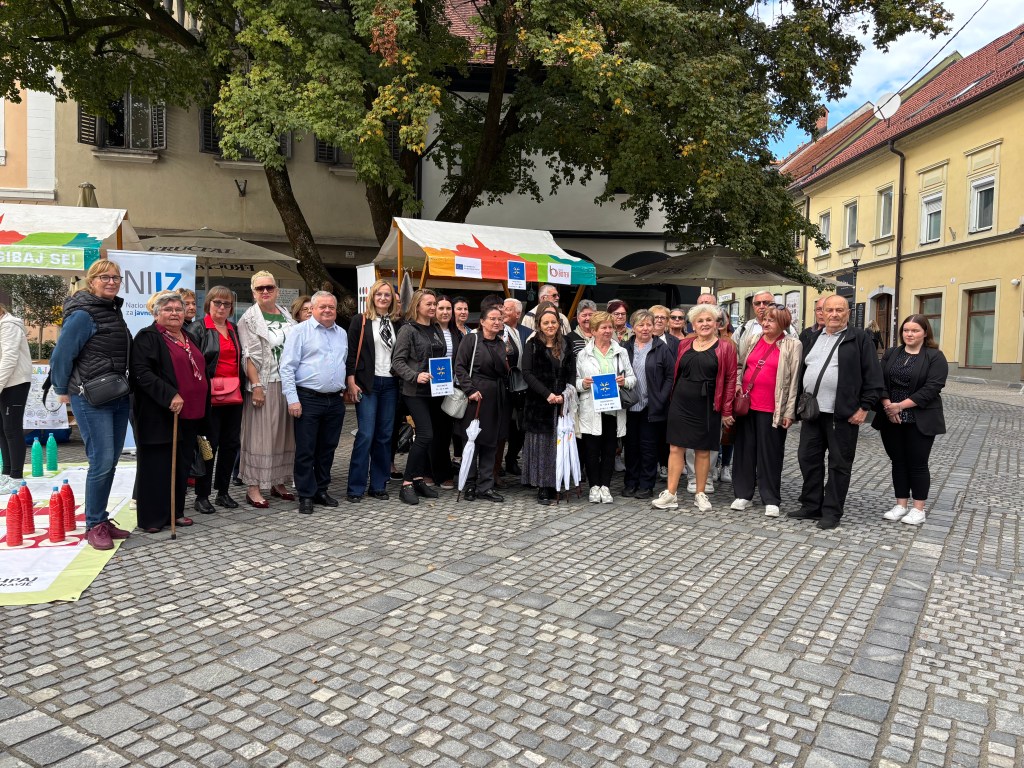
European Car-Free Day on Glavni trg
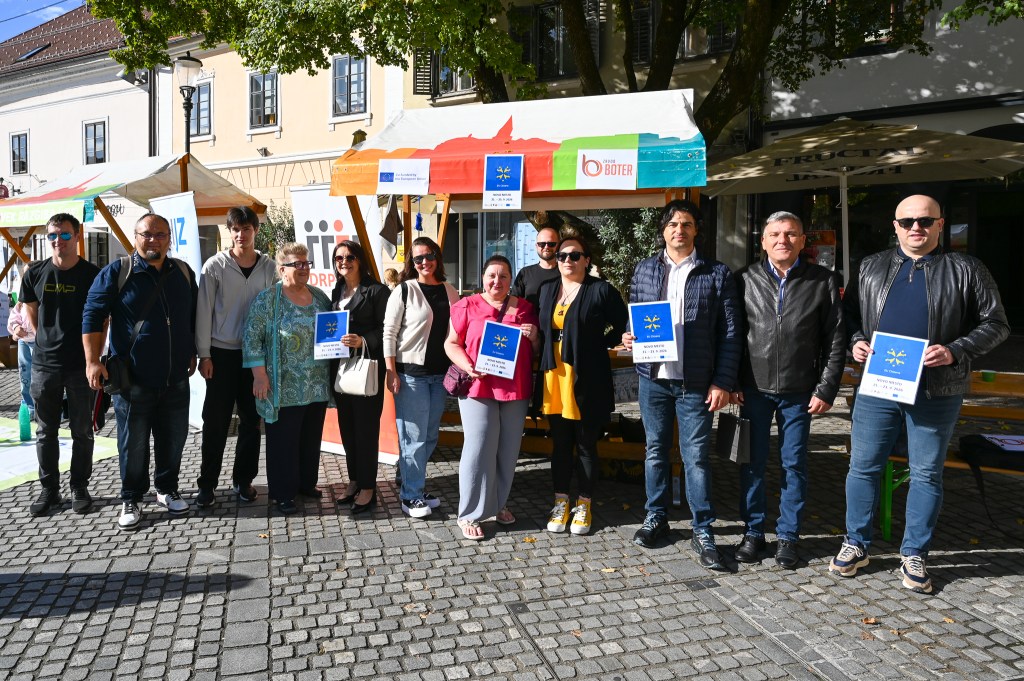
After breakfast, participants walked together to Glavni trg, the main square of Novo mesto, and joined the European Car-Free Day. Together with local citizens and visitors, they experienced a town centre dedicated to walking, cycling and people. For the international group, it was a practical introduction to the topic of the day: how we move around our towns, and how our everyday choices affect the environment, public spaces and the quality of life.
The EU citizens event at the Town Hall
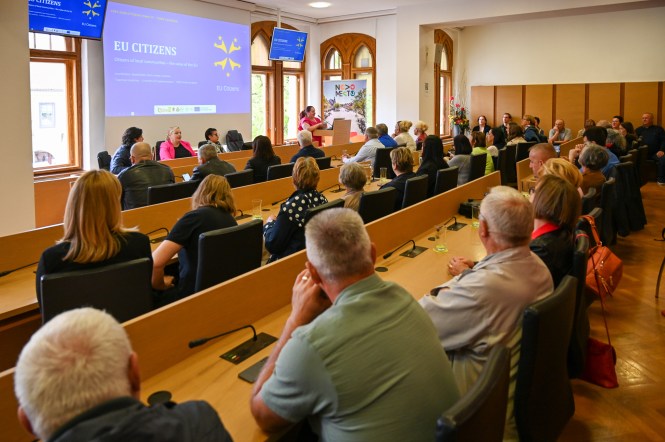
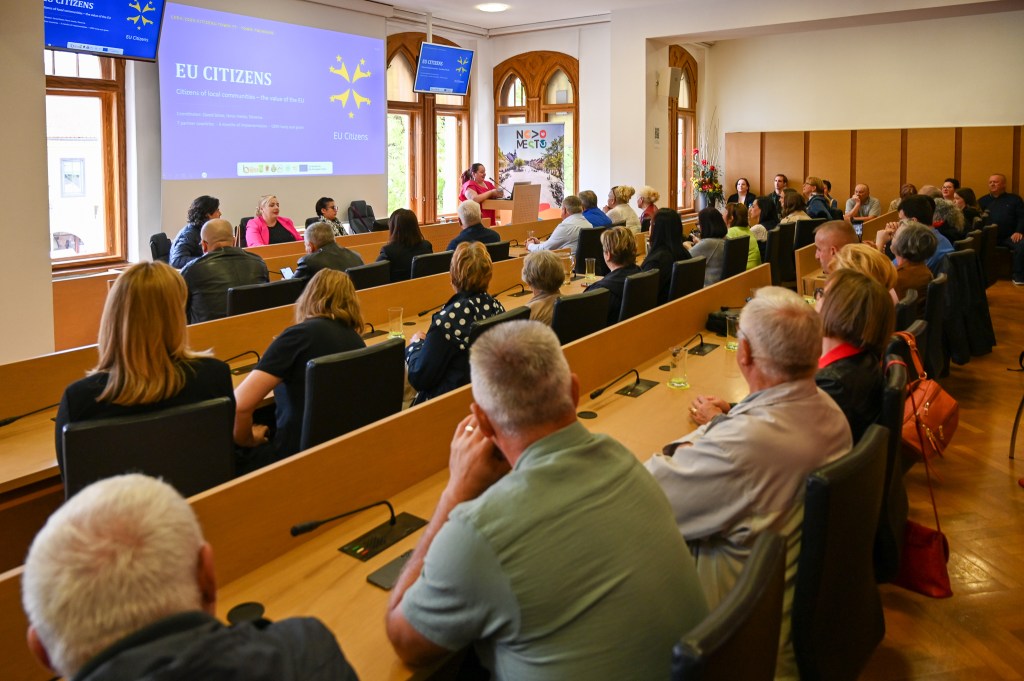
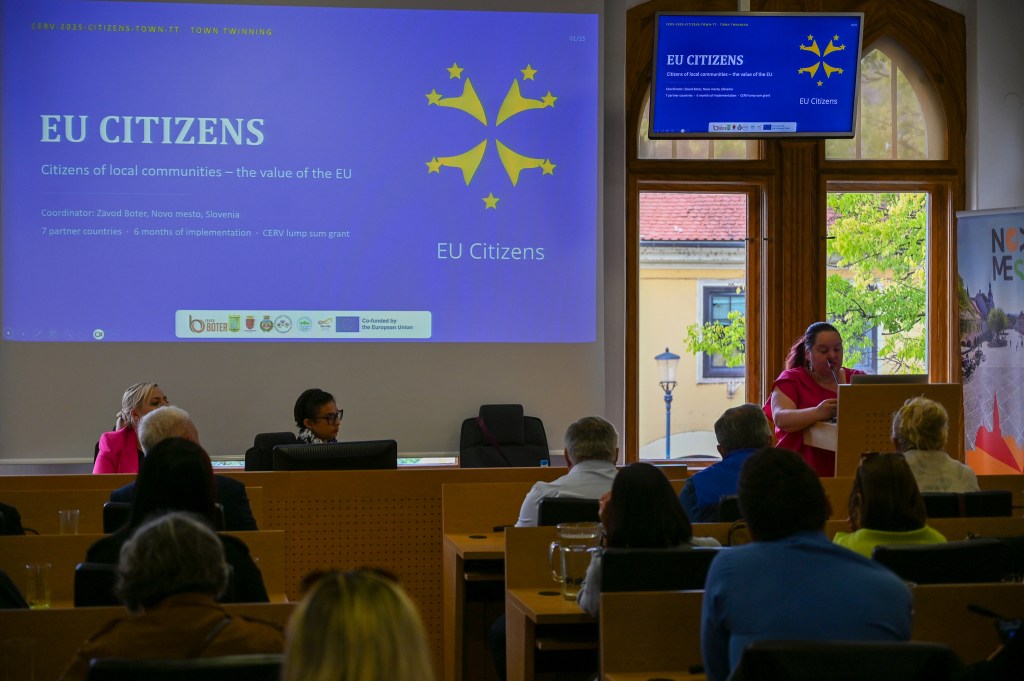
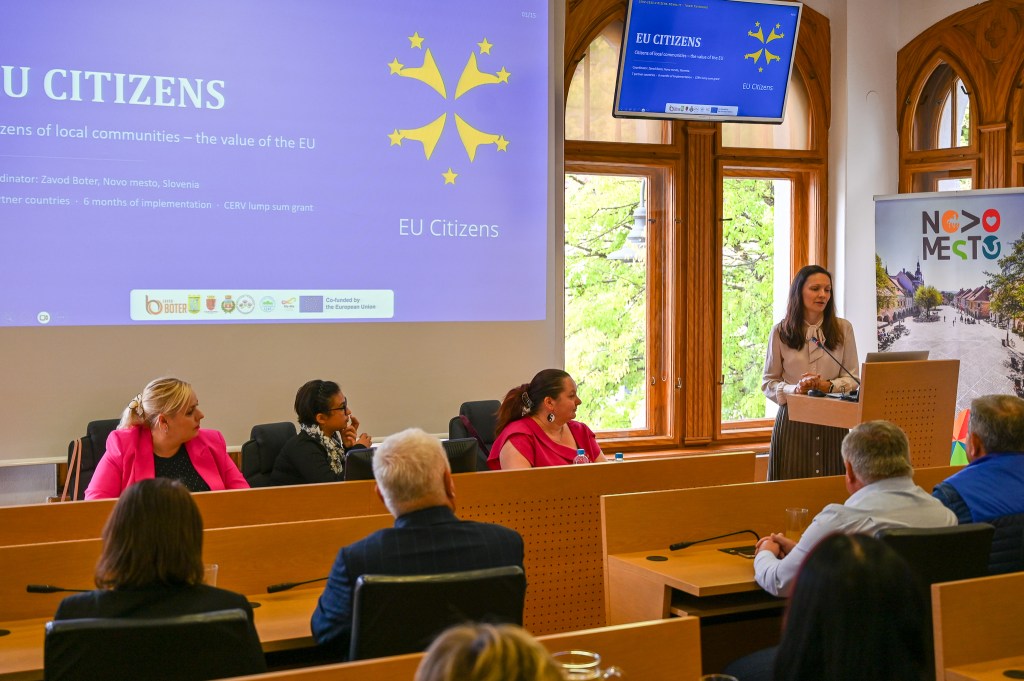
The group then gathered at the Novo mesto Town Hall (Rotovž) for the central EU citizens event.
The event was opened by project manager Ester Snedec from Zavod Boter, who welcomed partners and guests from Malta, Serbia, Greece, Croatia, Bulgaria, Italy and Slovenia. She stressed that European values become meaningful when citizens live them in their everyday communities. Democracy, solidarity, equality, cultural diversity and active participation, she said, are not only ideas written in official documents; they become real when people meet, listen to one another and work together. She also pointed out that the true value of the project cannot be measured only in numbers, but in the encounters between people: every conversation can challenge a stereotype, and every friendship across borders can become a small contribution to a more united Europe.
Deputy Mayor of the City Municipality of Novo mesto Sara Tomšič then addressed the participants. She presented Novo mesto and its rich history, explained the meaning of Car-Free Day and spoke about the town’s commitment to sustainability. She highlighted local good practices and the importance of a healthy lifestyle, including walking, cycling and the use of public transport to reduce pollution and improve life in the town.
Andraž Prus followed with a presentation of the project and the CERV programme. He explained that CERV invests in trust, in dialogue and in the feeling that citizens across Europe are part of the same story, and that the project belongs to the programme’s pillar on citizens’ engagement and participation, within the Town Twinning initiative. He presented the project’s objectives, from raising awareness of sustainable mobility and strengthening the capacity of local communities to benefit from EU membership to intercultural dialogue among young people, the exchange of good practices and building links that will last beyond the project. He illustrated the topic of mobility with a simple observation: reaching for the car keys is a surprisingly universal European reflex, regardless of which side of the border we live on.
In the final part, representatives of all partner organisations presented their countries and home towns in connection with the theme of the event. Their presentations showed both the diversity of local realities and the many challenges that European towns share.
Lunch, the Herbal Centre Škocjan and a guided tour of the town
After the event, participants continued their conversations over lunch at Gostišče na trgu on the main square.
In the afternoon, the group from Croatia, who joined the conference for this day, travelled by bus to the Herbal Centre Škocjan (Zeliščarski center Škocjan). There, they visited the herb garden and learned about the centre and its work, before setting off for home. The visit added another local good practice to the programme, linking the topics of sustainability and a healthy lifestyle with nature, local knowledge and the rural environment.
The other participants stayed in Novo mesto for a guided tour of the town, followed by free time and dinner at Hotel Pri Belokranjcu.
Disclaimer:
Co-funded by the European Union. Views and opinions expressed are however those of the author(s) only and do not necessarily reflect those of the European Union or the European Education and Culture Executive Agency (EACEA). Neither the European Union nor the granting authority can be held responsible for them.