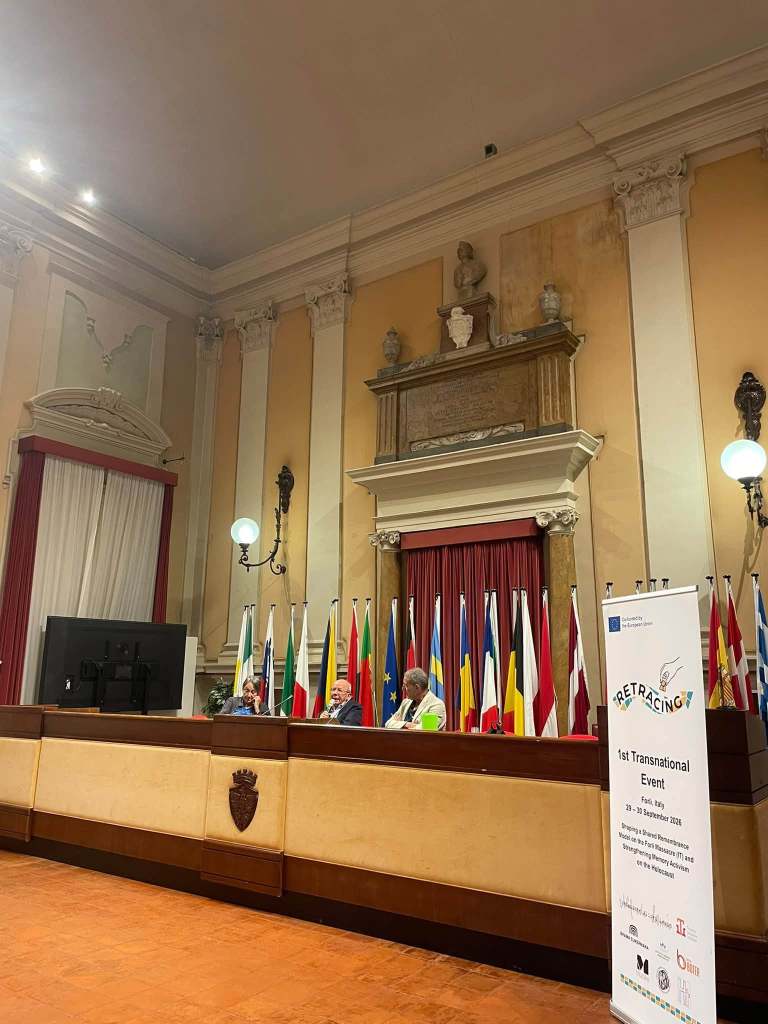
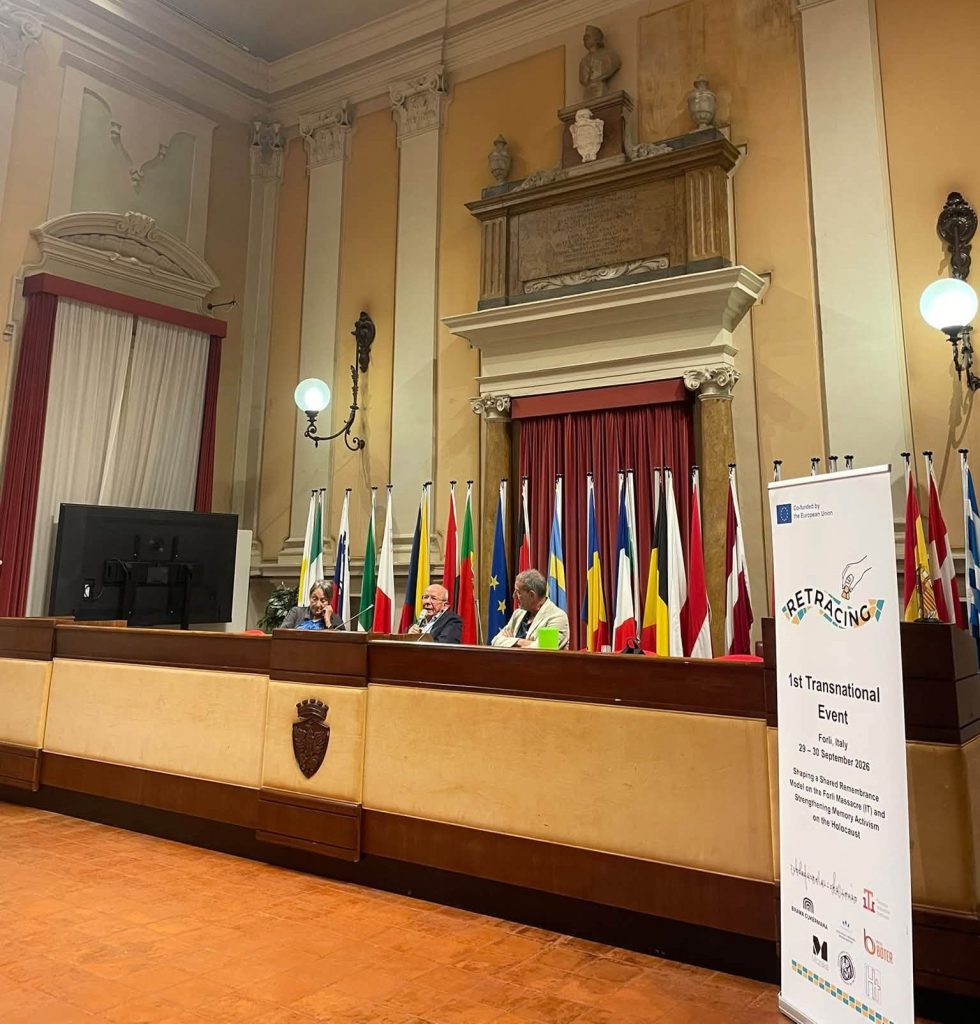
Last week, international partners of the RETRACING project gathered in Forlì, Italy, for an intense and deeply moving transnational event dedicated to shaping a shared remembrance model and strengthening memory activism on the Holocaust.
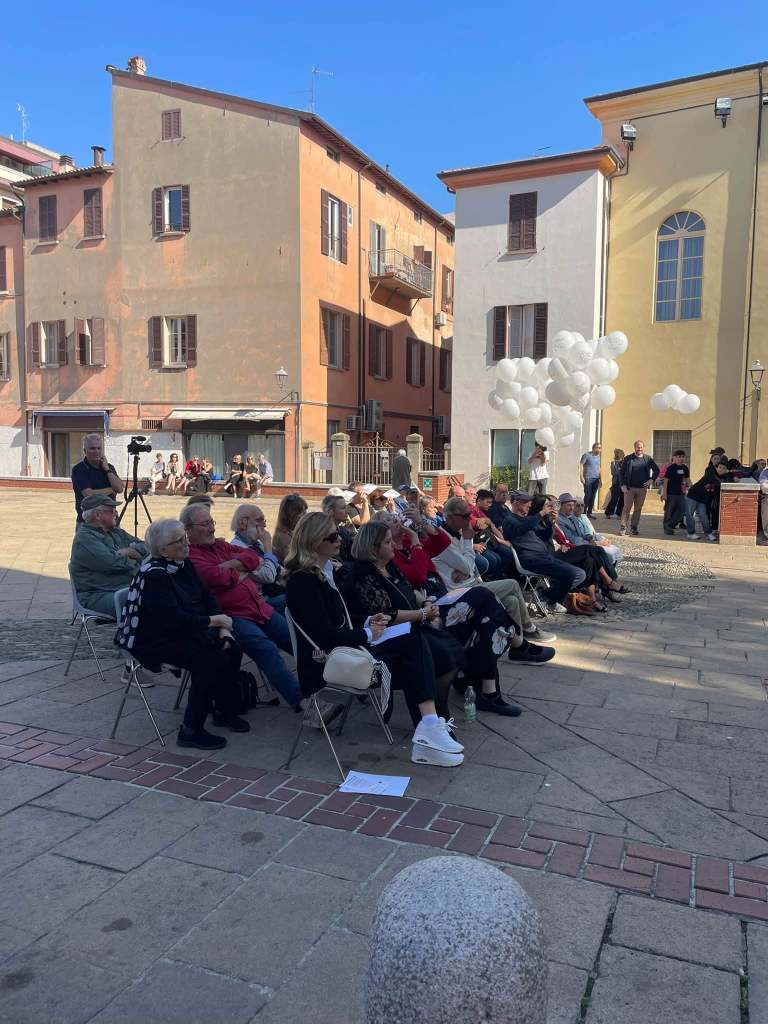
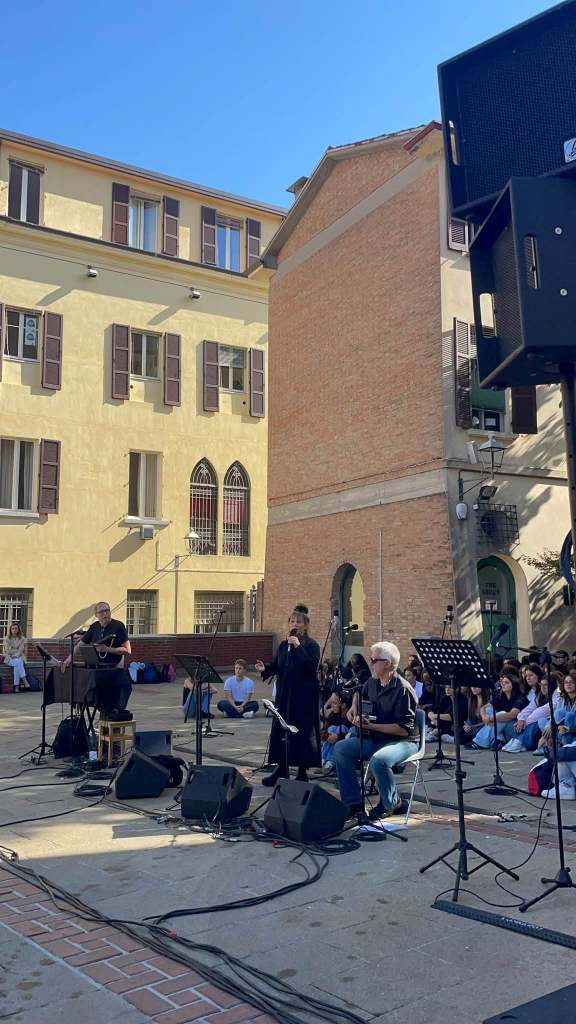
The programme commenced with a powerful Official Commemoration of the Forlì Massacre at Piazzetta della Misura, featuring institutional addresses, readings from victims’ letters and diaries, and musical interludes alongside local high school students and victims’ relatives. The ceremony concluded with a student choir performing “Senzeni Na?” and the solemn reading of the names of the 42 victims. As the names were solemnly read aloud, participants released balloons bearing the victims’ names into the air, creating a poignant visual tribute that bridged the past with the present.
Following a visit to the Fondazione Alfred Lewin ETS and its digital newspaper archive, the consortium held its official project meeting to coordinate communication strategies, review administrative tasks, and discuss implementation steps for the local Micro-History Labs. The first day closed with a public conference titled “Le scelte,” featuring journalists Wlodek Goldkorn and Gigi Riva discussing Holocaust remembrance and individual responsibility.
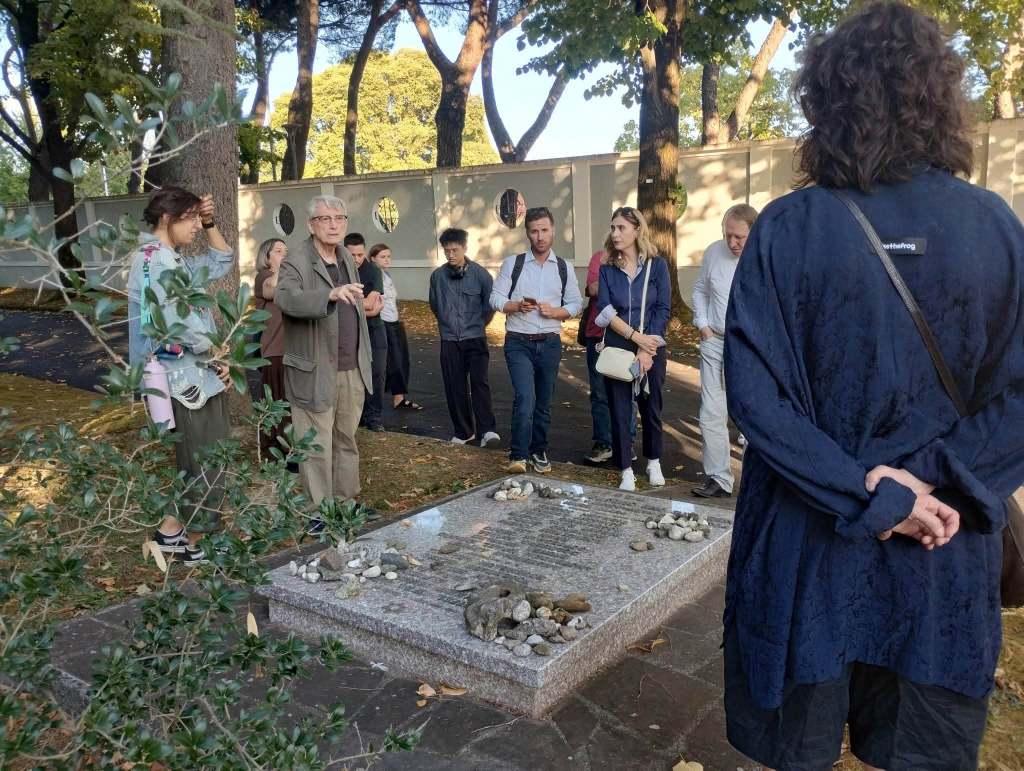
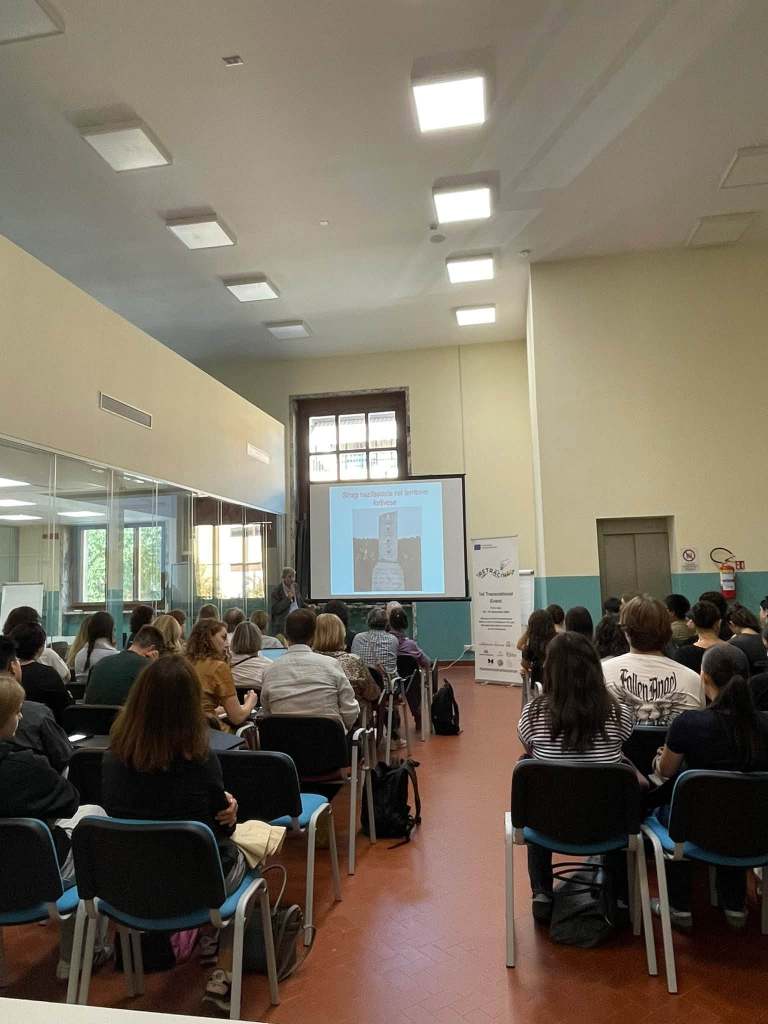
The second day focused on the experimental Micro-History Lab at the ex-Asilo Santarelli, featuring historical insights from historian Miro Flamigni and archive director Gianni Saporetti regarding the Forlì Massacre and local documentary sources. In the afternoon, participants took part in a guided Memory Walk across significant local sites, including the Monumental Cemetery, Via Seganti, Forli Prison, and Corso Diaz, tracing how the dark history of the 1944 massacres remains embedded in the contemporary urban landscape.
The gathering concluded with a joint evaluation session where partners reviewed the pilot lab, shared feedback, and planned upcoming activities for the next stages of the project. This visit not only strengthened our transnational cooperation but also powerfully demonstrated how micro-history can bridge past atrocities with contemporary youth activism.