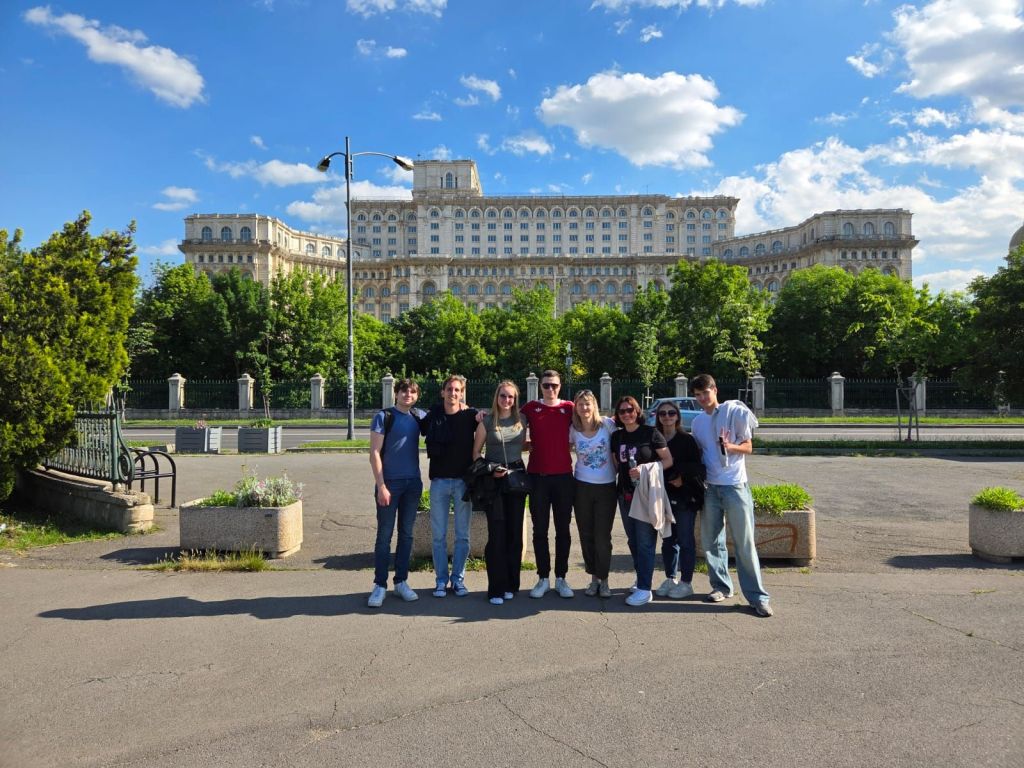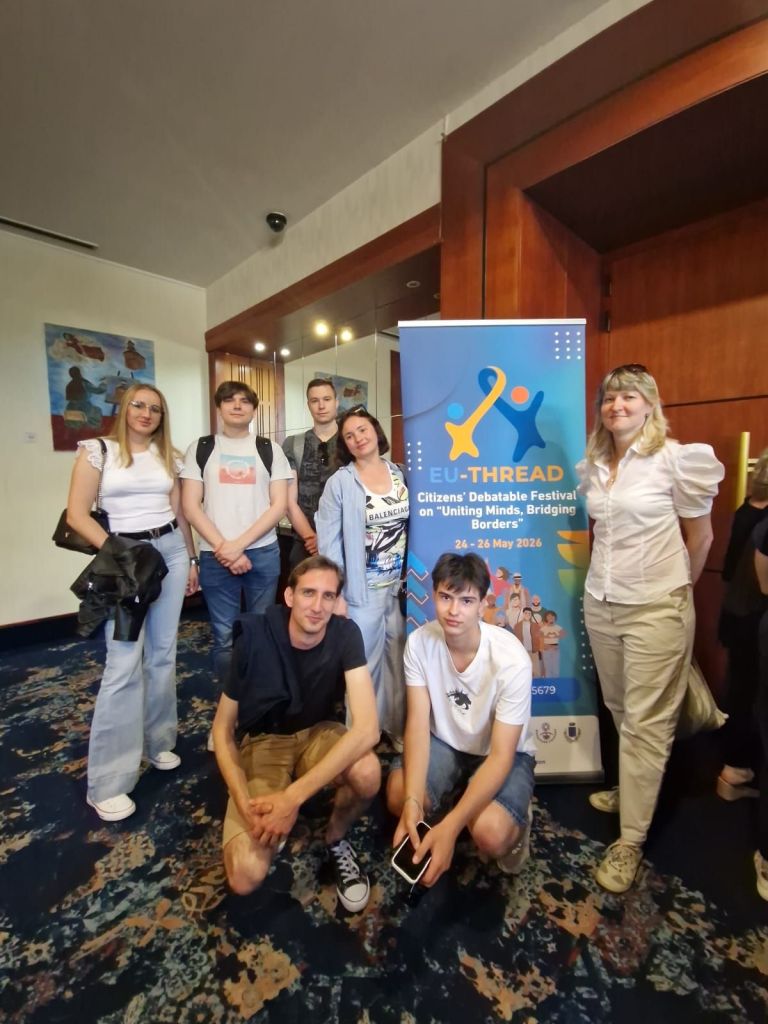
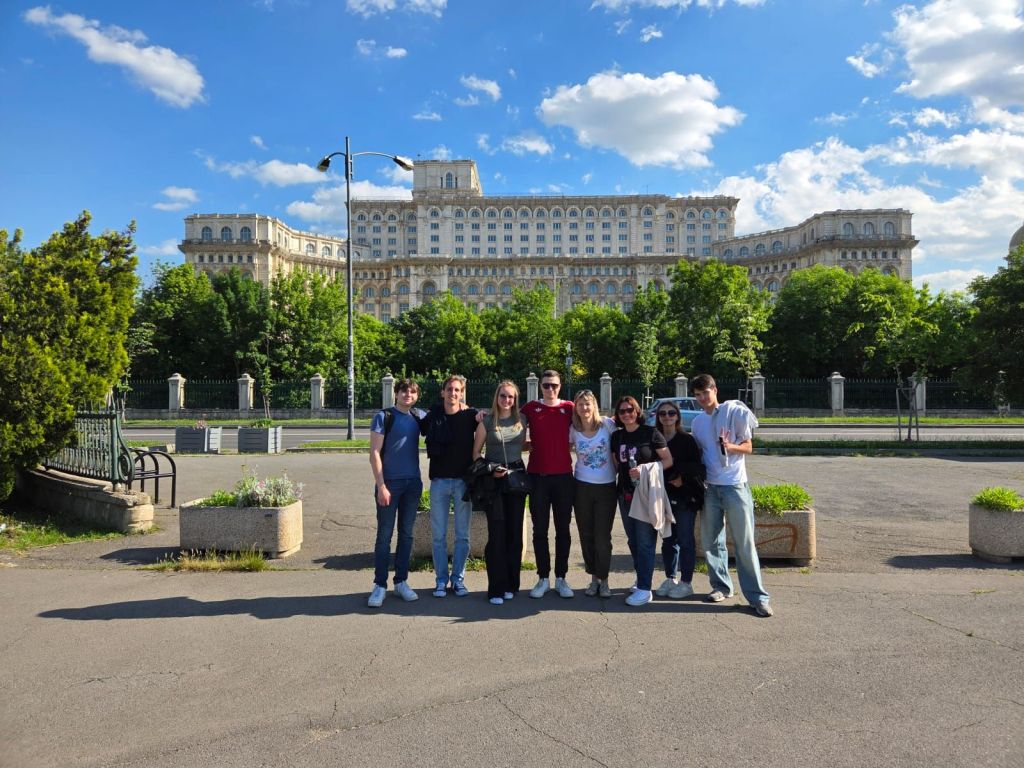
Between May 24 and 26, 2026, eight representatives of Zavod Boter attended the final meeting of the EU-Thread project, “Coming Together within the EU Integration Tapestry,” in Bucharest. Through community-binding activities, the project promoted an understanding of the key themes of the European Union and strengthened a sense of shared European identity.
The 12-month CERV project connected partners and participants from Romania, Greece, Slovenia, Bulgaria, and Italy. Through cooperation between organizations and local communities, it created a space for intercultural dialogue, the exchange of experiences, and the strengthening of cross-border cooperation. The project focused on the themes of European integration, citizen involvement, mobility, and shared European values. Through various educational activities and discussions, participants developed a better understanding of how the European Union works and the importance of active citizenship in modern society.
The project was based on eight thematic pillars, or “Eight Generator Pylons,” which included the fields of active citizenship, cultural diversity, European integration and mobility, sustainability, innovation, youth empowerment, social inclusion, as well as peace and security. These topics guided the activities and discussions throughout the entire implementation period of the project.
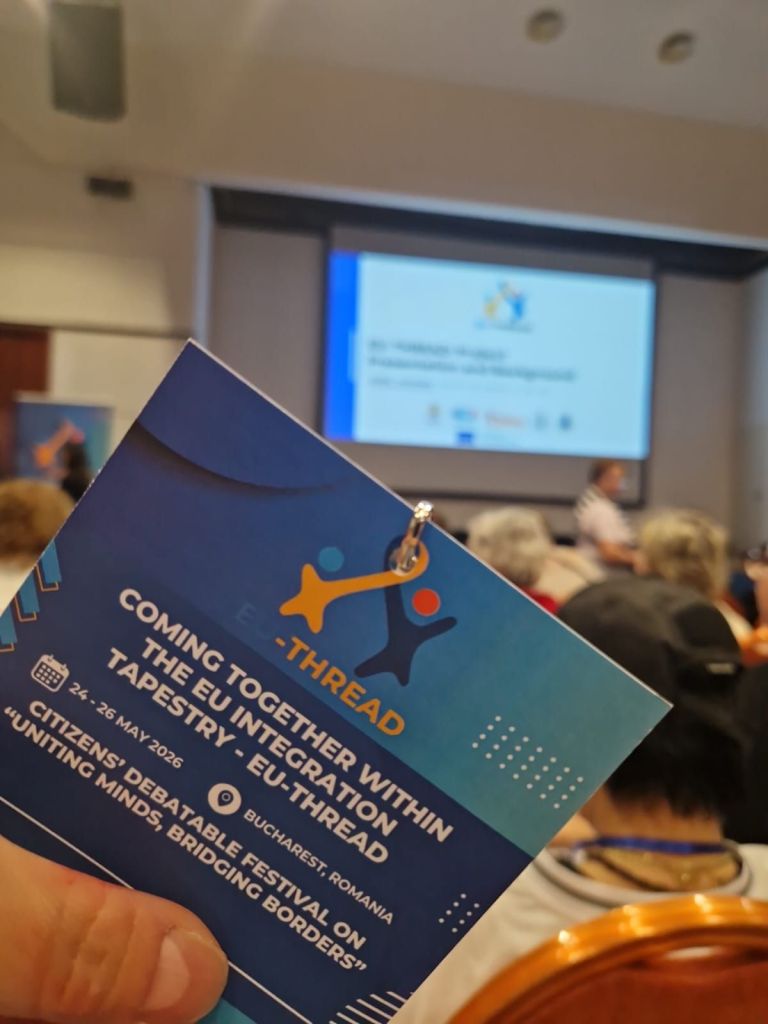
The concluding part consisted of an international meeting in Bucharest, where partners and participants gathered for a multi-day event aimed at exchanging experiences and discussing the future of European democracy. The introductory part of the meeting was marked by the reception of participants and welcoming speeches by representatives of the partner organizations from the participating countries.
This was followed by expert lectures and presentations on the importance of active citizenship and involving citizens in democratic processes. Special emphasis was placed on the questions of how the European Union can reconnect with citizens at the local level, how to encourage greater youth participation, and how to build a more inclusive and solidary Europe. Participants also took part in an open discussion on the future of European democracy, the challenges of modern society, and the possibilities for greater involvement of local communities in European decision-making processes.
EU-THREAD thus represented an important example of international cooperation which, by connecting people, ideas, and communities, contributes to strengthening European values and creating a more connected, democratic, and inclusive Europe.